
Your house, on sunshine with Pacific United Power
Your home. Your power. Your choice.
Electricity is a necessity. Having control over its cost shouldn’t be a luxury.
While traditional utilities leave homeowners with limited choices and rising bills, Pacific United Power helps families explore a better alternative: independent energy designed for greater freedom, predictable costs and long‑term peace of mind.
What happened to the price of power?
In 2010, power was fifteen cents.
Today it's 33¢.
Most of that is delivery charges, not the power.
And you pay for all of it.
People are already talking about it.
Utility rates just doubled. Why let it happen?
He couldn't take the charges, so he started a movement: nearly 24,000 signatures against LADWP.
Instead of fixing the grid, they switch it off.
Over 50% of your charges are delivery fees, not the power.
Power prices hit a record 33¢
California Homes Paid 33.25¢ a Kilowatt-Hour So Far in 2026, the Highest Figure in the Federal Record
Rates have more than doubled since 2010 · Up in fifteen of the last sixteen years
By the numbers
| 2010 | 15¢ |
| 2026 | 33¢ |
| Bill, 2019 | $102 |
| Bill, 2025 | $155 |
| Usage since 2019 | −7% |

The January-to-July 2026 average sits above every full year on record. Adjusted for inflation, 2024 still stands as the real-terms peak; the 2026 figure is preliminary and will be revised when the year closes.
Most of the climb came after 2020. The average bill rose from $102 to $155 a month between 2019 and 2025 while homes used 7% less.
What it means at home: the same electricity as in 2010 costs more than double today, and using less has not brought the bill down.
the CPUCSouthern California EdisonFinal
363,196 shut off for fire risk
Edison Cuts Power Across Its Territory in the January Wind Event, Among the Largest It Has Filed
Public Safety Power Shutoffs are planned de-energizations during high wind, meant to keep lines from starting fires. The January 2025 event was among the largest Edison has filed with the Public Utilities Commission.
Wildfire costs, mitigation, liability and insurance, now make up about 17% of every Edison bill, by the Commission's own 2025 report.
What it means at home: the grid is switched off on purpose on the days it is needed most, and the cost of preventing fires is on the bill either way.
Heat storm knocks out power to 129,000
Crews worked through the September 2024 heat storm to restore service over several days.
Transformers and cables overheat when demand stays high through the night. With no cool-down hours, equipment that would normally recover keeps running hot until it fails.
What it means at home: a heat wave is now a grid event, not just a weather event.
newsFOX 11 Los AngelesVan Nuys · December 11, 2025Consumer
report
A meter dispute in Van Nuys:
$13,000 bill
One LADWP bill reached five figures. The station traced the charge to a dispute over the meter reading and the billing itself. LADWP has faced a class-action settlement over billing before.
What it means at home: the number on the bill and the number on the meter are two different things. Read every bill line by line.
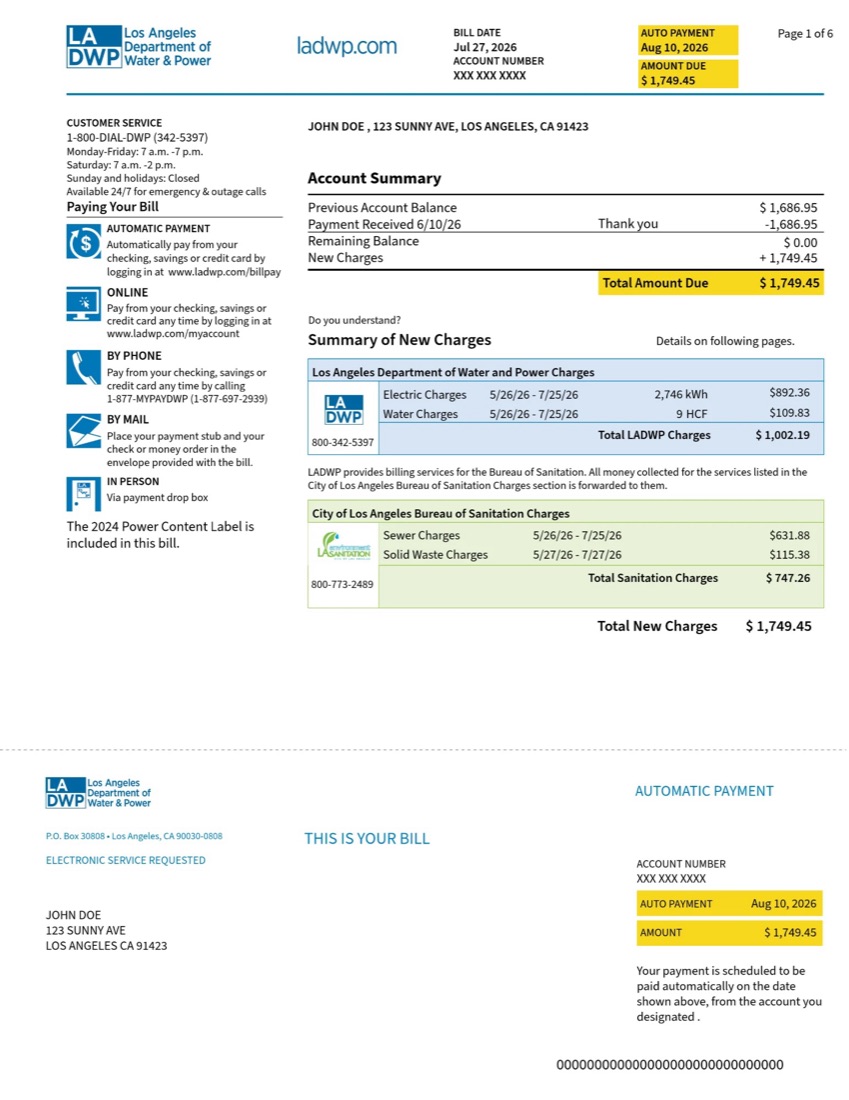
South LA loses power again
Outages return to South Los Angeles blocks, days into another stretch of heat.
Residents described repeated outages across several blocks as temperatures climbed. Two summers earlier the same kind of heat took out power to 129,000 LADWP customers.
What it means at home: heat is the season the grid is least sure of, and the neighborhoods with the oldest equipment feel it first.
Summer peak within 3% of the all-time record
September 9, 2026, against the 2022 record of 52,061 MW.
Every recent annual peak has landed between mid-August and early September, in the late afternoon, when air conditioning is at full load and the sun is going down.
What it means at home: the hours the grid strains hardest are the hours a battery on your side of the meter is worth most.
October 6, 2026
$3,300 bill sparks backlash
Valley homeowner's two-month LADWP bill goes viral. Calls grow for an independent audit of summer rates.
The $3,322 bill covered two months of a San Fernando Valley summer. Electricity made up about two-thirds of it; water, sewer and trash the rest. Within days the city controller opened a review.
What it means at home: LADWP bills every two months, so one hot stretch lands as a single number.
Los Angeles
What's news
- The city controller opened a review after the $3,300 bill drew attention citywide.
- The review covers the account and the summer rate structure.
- LADWP has settled a class action over billing before.
City controller investigates $3K bill
The office said it would review both the individual account and the summer rate structure that produced it. What it means at home: the rate itself is now the question, not one meter.
A fifth of our power comes from other states
22.3% of California's electricity in 2024 was imported over long transmission lines from the Southwest and the Northwest. The state generated 77.7% of its own.
Data centers could add 32.6 TWh a year by 2045
The state's official demand forecast, adopted in January 2026, is what the grid must now be built for. What it means at home: new load means new wires, and the wires are what the bill pays for.
of every Edison bill now pays for wildfire costs
Mitigation, liability and insurance after fires started by utility lines. The Commission names wildfire costs as one of three primary drivers of rate increases.
About 57% of what Edison bills is delivery: distribution is about half of its revenue requirement, transmission 6%. The electricity itself is 35%.
What it means at home: most of the bill pays for the grid, not the power you used.
Rooftop solar saved ratepayers $1.5 billion
A study of 2024 by M.Cubed for the solar industry disputes the Commission's cost-shift estimate.
The analysis credits homes with their own panels for lowering what the whole system had to buy and build in 2024. It was commissioned by the industry, and the Commission's own estimate points the other way.
What it means at home: a roof that makes its own power is on the other side of every number on this pile.
California surpasses 21,000 megawatts of battery resources
The state's batteries charge on the midday sun and give it back in the evening peak. What it means at home: a home battery does the same job for one house.
New residential electric rates take effect
Schedules R-1A and R-1B, LADWP's standard residential rates, reset on October 1.
The rates are tiered: the more power a home uses in a billing period, the more each kilowatt-hour costs.
What it means at home: a hot summer pushes more of the bill into the top tier.
Instead of fixing the grid, they switch it off.
Over 50% of your charges are delivery fees, not the power.
Every page is real. Tap one to read it at the source.
The fix is taking back control.
Make your own power on your roof, store it in a battery, and stop living by the utility's next rate change.
- Check.Your address and a few taps tell us if the house qualifies.
- Review.We study your roof from above and your electrical panel.
- Compare.Licensed installers and every way to pay, matched to your house.
- Decide.We sit down with you and you choose.
- Install.A licensed partner fits the panels and the battery.
- Power on.The sun comes up, the battery fills, the grid line goes quiet.
What does your bill add up to?
$250a month
That's $75,000 sent to the utility over the next 25 years, at today's rates.
An estimate at today's bill, before any rate increases.
An answer for every house.
Your utility, your roof and your plans decide the fit. Sometimes the answer is not yet, and we say so.
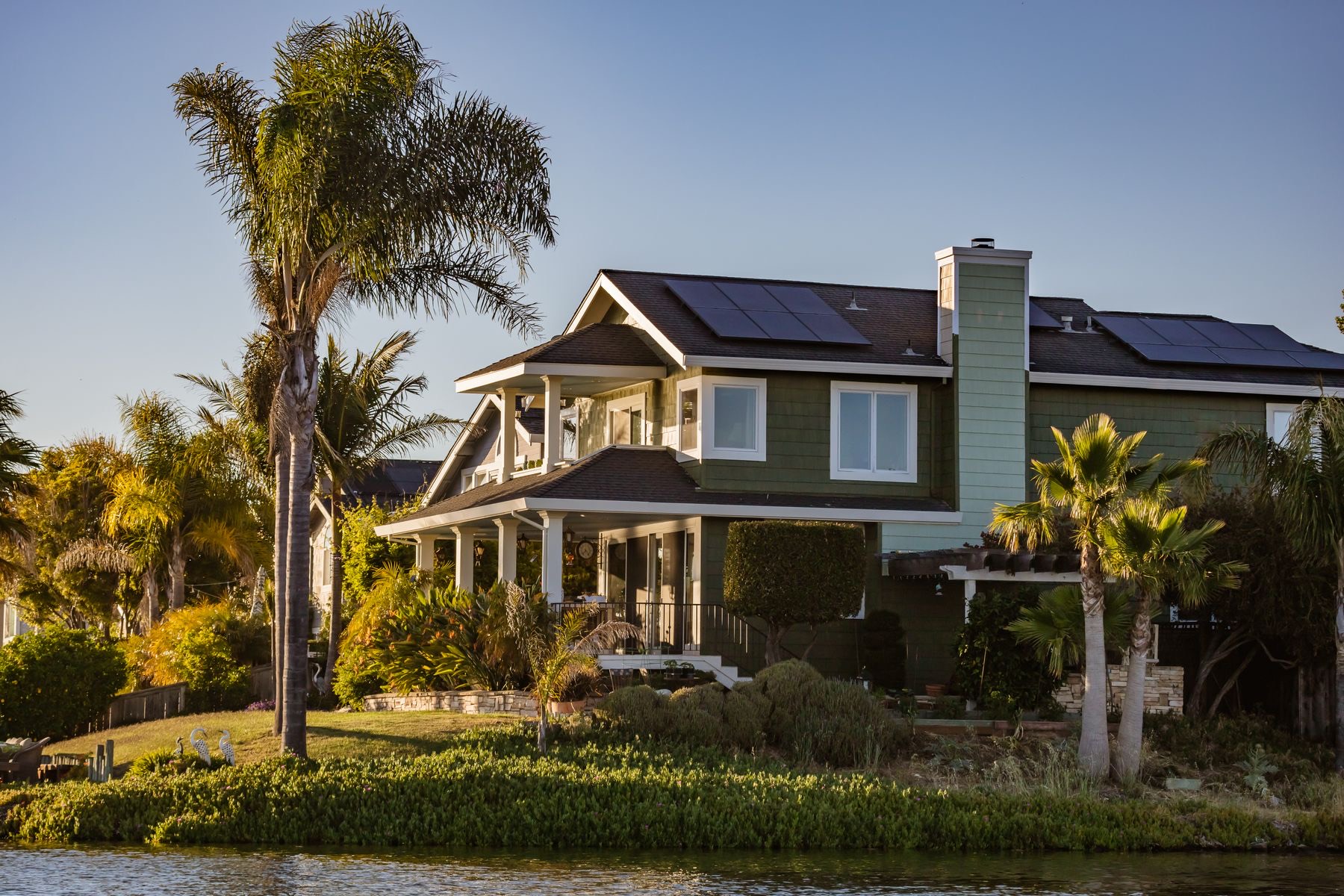
Lease/PPA
A monthly payment set in your agreement, with nothing up front.

Solar + battery
Save the noon sun for the 4 to 9 pm peak, and keep the lights on in an outage.
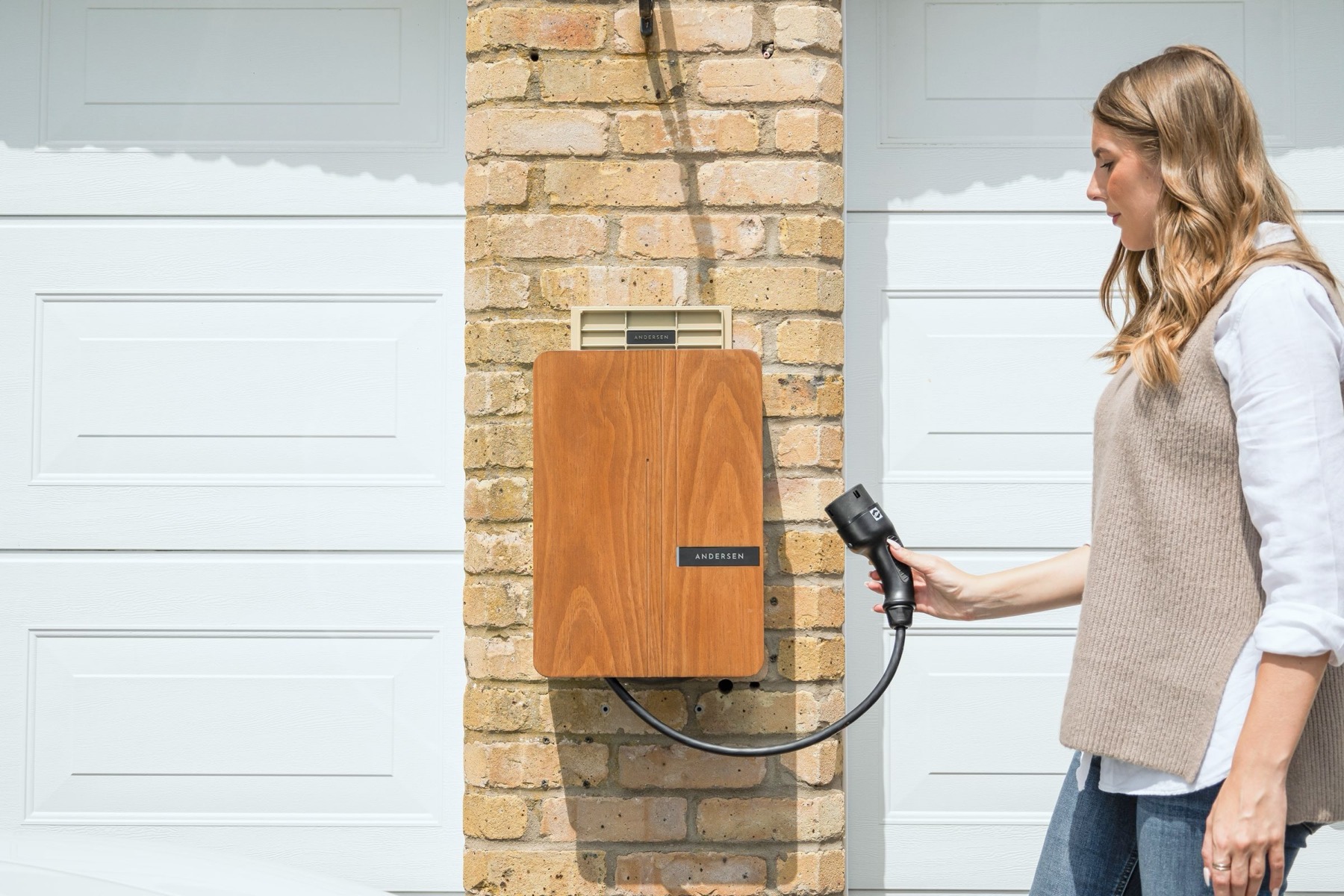
Room for an EV
Sized for the car in your driveway, or the next one.

Not a good fit?
Not enough sun? Not enough savings to justify it? We'll tell you.
Ask for an honest answer
Solar isn't only a way to save money. It's a way to stop renting your power from a company that sets its own rules.
See what solar can do for you.
Leave your address and number, pick a time, and an advisor walks you through your home's options on a short call. Free, with no obligation.
Rather talk? Call (619) 415-9647 or text us.